

From May 27 to July 24, 2026, an employee of KazNIISA JSC participated in the training program “Strengthening Seismic Disaster Risk Reduction Countermeasures for Critical Buildings”, organized by JICA in partnership with the Japanese Building Research Institute (BRI).

Figure 1. Ali Tuleev, an employee of KazNIIASA JSC, with participants of JICA program from 14 countries, as well as BRI and JICA staff
The program was designed to enhance the professional skills of specialists in the areas of assessing technical condition, ensuring seismic resistance, and performing seismic retrofitting of critical buildings. During the training, special attention was paid to modern building inspection technologies, methods for assessing seismic safety, seismic retrofit technologies, and seismic isolation systems using seismic isolators and damping devices.
The program was attended by experts from 14 countries, including Albania, Algeria, Mongolia, Uzbekistan, as well as countries in South America and Southeast Asia, which facilitated the exchange of international experience in the field of earthquake-resistant construction and natural disaster risk reduction.
During the program, participants visited NIED, the E-Defense Testing Center, the Disaster Reduction and Human Renovation Institution (DRI), the Nojima Fault Preservation Museum, the Takenaka Carpentry Tools Museum, the UR Museum of Urban and Lifestyle Design, the Honjo Life Safety Learning Center, a residential development under construction in Tokyo, the Akashi Kaikyo Bridge, as well as other organizations and facilities dedicated to advancing earthquake-resistant construction, reducing natural disaster risk, enhancing building safety, and improving urban infrastructure.
In addition, lectures and hands-on sessions on modern methods for inspecting, assessing the seismic safety and retrofitting critical buildings were held at the Building Research Institute (BRI).
A visit to the National Institute of Earth Science and Disaster Resilience (NIED) and the E-Defense testing center provided an opportunity to learn about Japan’s cutting-edge research and experimental methods for assessing the seismic resistance of buildings and structures.
The E-Defense complex enables full-scale testing of full-size structures by simulating real three-dimensional seismic loads, which makes it possible to study the behavior of buildings during earthquakes, evaluate the effectiveness of seismic retrofitting methods, and improve technologies for ensuring seismic resistance.
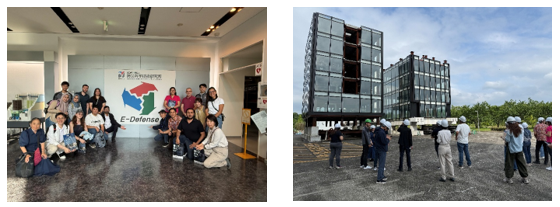
Figure 2. Participants in the professional development program in front of the National Institute of Earth Science and Disaster Resilience (NIED) building, Japan
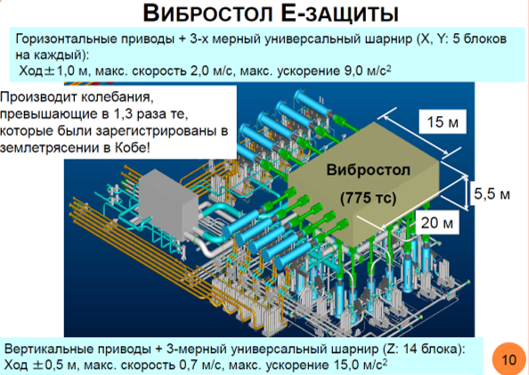
Figure 3. Three-component seismic platform for field testing
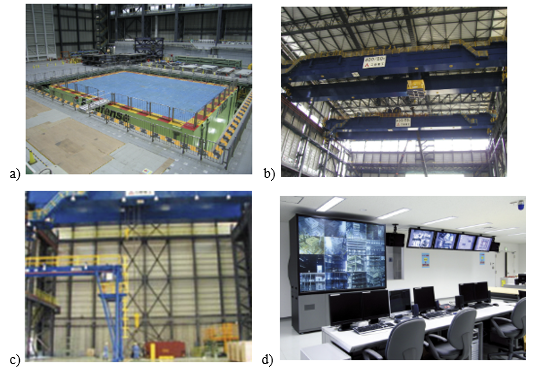
Figure 4. a) Vibration table (15×20 m), b) two overhead cranes with a lifting capacity of 400 metric tons each, c) “construction” operation, d) preparatory building
The training program also included a lecture on modern seismic retrofitting technologies for buildings, which are widely used in Japan to improve their resistance to seismic forces.
Specialists from the Building Research Institute (BRI) presented modern engineering solutions and the most effective methods for retrofitting existing buildings, which significantly increase their load-bearing capacity, stiffness, and operational reliability during earthquakes without requiring the complete dismantling of load-bearing structures.
Particular attention was paid to the principles for selecting reinforcement technologies based on the building’s structural layout, its level of seismic vulnerability, and the required operational characteristics, ensuring that the building meets the regulatory standards for seismic resistance after the reinforcement measures are implemented.
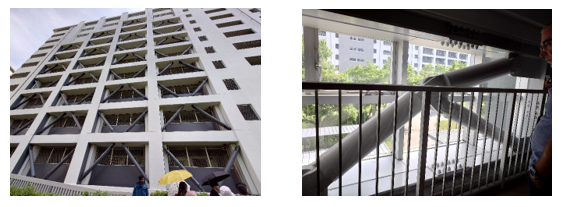
Figure 5. Reinforced buildings
The practical part of the training was organized based on the Japanese regulatory and methodological guide “Guidelines for Seismic Retrofit of Existing Reinforced Concrete Buildings”.
During the practical sessions, participants were provided with initial data on existing reinforced concrete buildings, based on which they performed calculations to assess their seismic resistance, determine the required level of retrofitting, and select optimal engineering solutions in accordance with the requirements of Japanese regulatory documents.
Completing these practical exercises allowed participants to reinforce their theoretical knowledge and acquire practical skills in applying modern methods for the inspection and seismic retrofitting of existing reinforced concrete buildings.
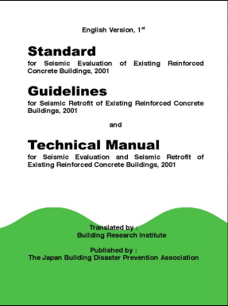
Figure 6: Guideline used for performing practical calculations and reinforcing buildings in accordance with Japanese regulatory requirements
As a result of the training, participants mastered modern approaches to seismic-resistant design, inspection, assessment of the technical condition, and retrofitting of buildings and structures, and also studied advanced Japanese technologies for reducing seismic risk. Participation in the program contributed to enhancing professional qualifications, expanding theoretical knowledge and practical skills, and exchanging experience with specialists from various earthquake-prone countries.
The knowledge gained can be applied to improving methods for inspecting, assessing the technical condition, and seismically retrofitting existing buildings and structures, as well as implementing modern engineering solutions in construction practices in the Republic of Kazakhstan.
Upon completion of the program, all participants successfully completed the assignments outlined in the curriculum and received certificates confirming their completion of the professional development course.
Ali TULEEV
JSC “Kazakh Research and Design Institute of Construction and Architecture” (KazNISSA).